
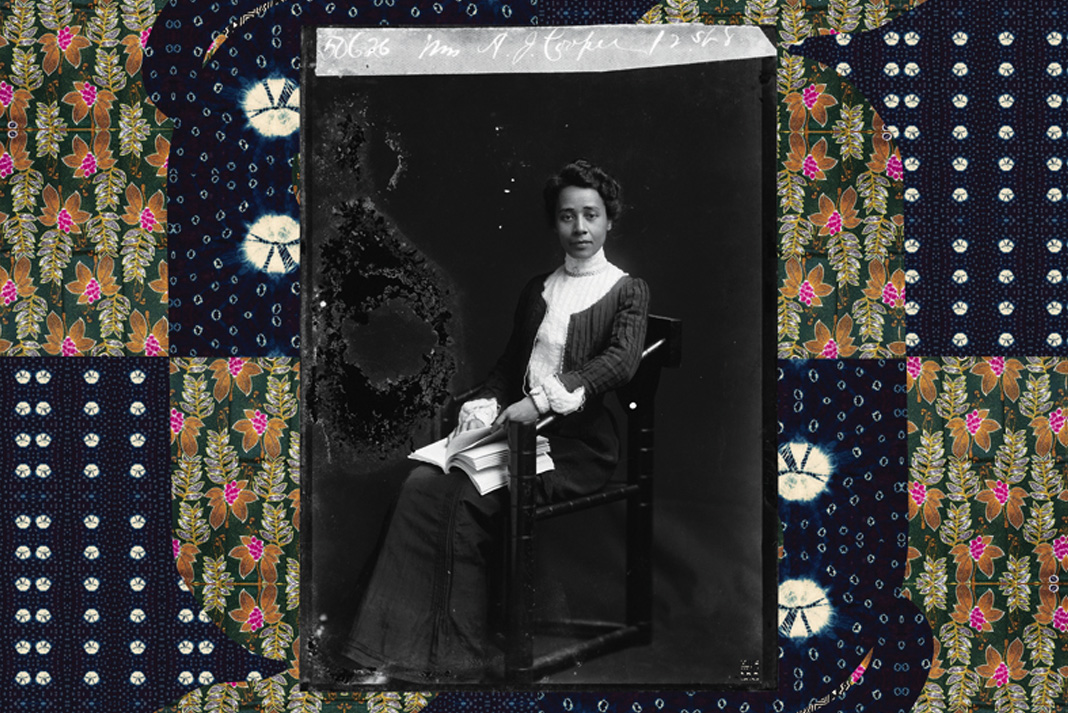
By Jonathan Burger, Craven Arts Council & Gallery, Inc.
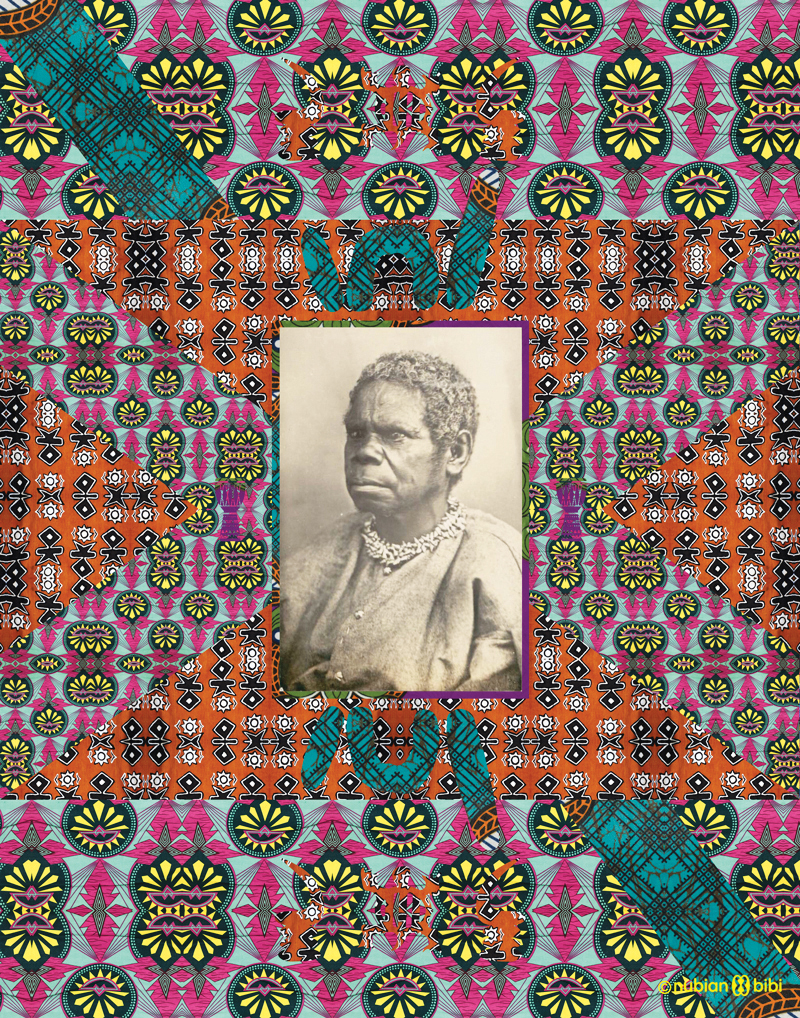
Where are you from and how did you come to live in eastern North Carolina?
I was born and raised in Atlanta, GA. I would say, my ancestors brought me to Eastern North Carolina to discover their stories.
Do you have any formal training, or are you self-taught, or a combination?
No, I have no formal training. However, I am “ancestral” self-taught which means I was bestowed with a gift from my ancestors who were weavers, jelis, sculptures, astronomers, mathematicians, and architects in our governing structure.
Does your work have a central theme, or several themes?
I envision nubian x bibi® as a way to produce narrative-driven work revolving around images of blackness through an unapologetic lens of freedom. People of African descent have so many narratives that live and thrive within their blackness. These imageries of blackness are more valuable than any Van Gogh, Picasso, or Warhol painting.
Your works draws a lot from imagery, patterns, and history. Can you talk about your process when creating a piece?
Once I have an ancestor in mind, my whole intent is to adorn him or her with various cultural artifacts to signify to their descendants and the world to never forget their name and story.
Color seems to play an important role in your works, both the presence of vibrant colors and the contrast of the black and white photos. Can you talk about color and it’s importance to you and your work?
As an African, colors are essential to my work because colors are unspoken words and meanings. For example, the Ancient Egyptian always depicted Wsir (“Orisis,” Greek origin) as green to represent afterlife, fertility (new life), and nature. Southern African (Black) women wear white during spiritual ceremonies to convey pureness and ancestral embodiment. Wodaabe men paint their faces with redish-orange clay to attract a potential wife during the Gewerol festival. Southern Nigerian women produce “Adire” (tyed and dyed) indigo textile to preserve their rituals and traditions.
Is there another artist whose work you admire or inspires you?
There is no one particular artist who influence my work. I am humbly inspired by those Africans who told their stories through hieroglyphs, weaved single threads into royal textiles, built breath-taking temples out of mud, used their fingers to map out unseen stars and constellations, and used their bodies to dance with God(s).
Do you have any advice for artists just starting out, or people wanting to get into the arts?
Love the process not the outcome. Love the purpose not the exhibition. Love the appreciation not the award.
What piece, award, or exhibition are you particularly proud of, and why?
I have no particular piece, award, or exhibition I am most proud of. I am humbly proud that I was chosen as a vessel to empower, reimagine, and rediscover my people’s history.
Where can people find your work?
My work can be found at www.nubianandbibi.com