
By Ann Marie Byrd, Feature Writer
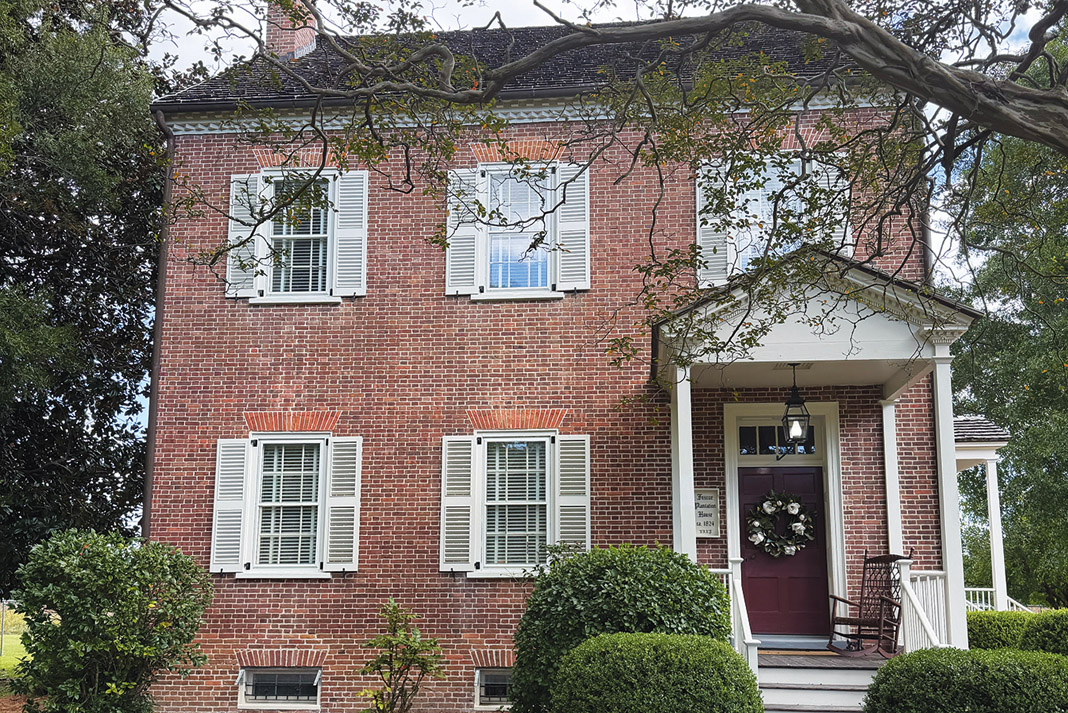
Most New Bern residents have driven past the Foscue Plantation House as they head south towards Pollocksville on US-17. On the outside, the house is encapsulated by an elaborate black iron fence and crepe myrtles, and is marked by a sign that notes its illustrious position on the National Register of Historic Places. It is not a large house, but perhaps that is because it is visually dwarfed by over 10,000 acres of land that surround it.
But make no mistake, this is no ordinary historic home, and visiting it is an exquisite, luxuriously authentic experience.
The word “museum” tends to bring up certain expectations–gazing upon interesting historical artifacts in low light, trapped behind glass at a peculiar, cold distance from the subject at hand.
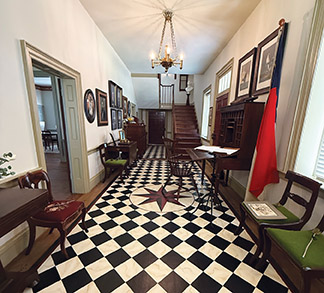
But taking a trip to the Foscue Plantation House Museum is like going on a sumptuous journey back in time. It doesn’t feel like a museum, rather, it feels like a home with tremendous longevity, that has been nurtured for generations. You can almost hear the table being set for a party, the children laughing, and a gentle refrain of Clair de Lune being played on the piano.
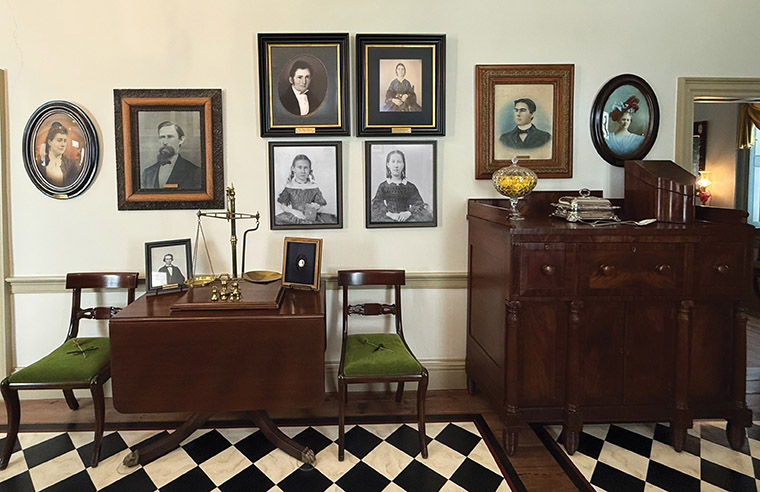
The grounds, the house, and the contents have all been meticulously preserved by the Foscue Family for nine generations, and the story of their lives is how the tour of the home begins. In the entryway, you will see a collage of paintings and photos of the family members that built and lived in the home in the early 19th century. Their stories are real, and revolve around themes of immense political power and wealth, loving marriages and children, the violence of the civil war, resilience and self-reliance, and debilitating disease and death. It is truly “Romantic,” in the classic definition of the term, for the stories are both sublime and surprisingly often, grotesque. Hearing these stories about Simon Foscue, Jr., his son, John Edward, John Edward’s wife, Caroline Foy and their children, Henry, Christiana and Mariana is one of the finest parts of the visit.
The three story house is over 200 years old, and was built in 1824 by Simon Foscue, Jr. It includes a parlor, dining room and kitchen, upstairs bedrooms and school room, as well as a working basement, cemetery, garden, forest, plantation land, and the Trent River at the back of the property. The plantation originally produced turpentine and tobacco, amongst other things. This home has survived two centuries of hurricanes, due in part to not only the strength of structure itself, which is brick both inside and outside, but also the elaborate brickwork and Flemish bond design on the facade with handsome corbelling on the gable ends. As anyone who has ever owned a historic home knows, the maintenance is never ending, and the Foscue family has done a spectacular job preserving this valuable piece of North Carolina history.
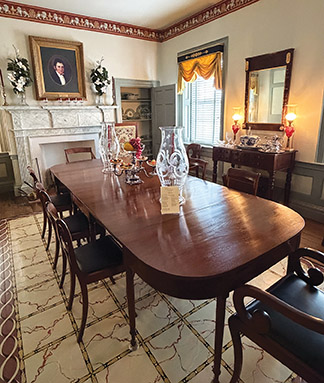
But oddly enough, it isn’t the house itself that feels like the star of the show—it’s the truly overwhelming amount of pre-Civil War furnishings: tables, chairs, sideboards, desks, artwork, fine china, glassware, textiles, rugs, beds, dressers, curtains, needlepoint, clocks, jewelry, books, etc. A great number of these antiques are original to the house itself, some are re-claimed from family members, and even more are period-specific pieces that have been purchased over the years (including a desk and chairs belonging to James Madison), particularly under the watchful eye of “Jimmie” Foscue, Jr. between the years of 2002-2025.

James “Jimmie” E. Foscue, Jr., who recently passed away in June of 2025, was a direct descendent of the family, and kept the property in a state of ongoing preservation and restoration for the last 23 years. His father before him created the family Trust and is fondly referred to as the plantation’s “benefactor.” Caring for the house and its contents was more than a hobby for Jimmie—it was an obsession and he did it in honor of his father. He was particularly skillful in searching for and purchasing antiques from the 19th century that were exclusive to the “high ante-bellum style” that was authentic to the house. He purchased and restored countless pieces of period correct furniture, hunted for treasured objects such as books and artwork, and when an original item couldn’t be found, he laboriously recreated it, such as the case with textiles such as curtains and coverlets. His meticulous care and passion for the museum can still be felt to this day.
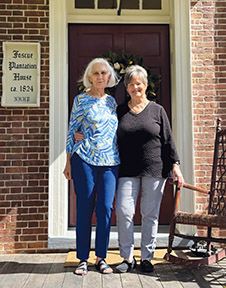
Carol Foy, who is the President of the Foscue Plantation Foundation and a Docent, leads weekly tours. She says “the house has been called the finest surviving example of the rural influence of the stylish side-hall plan and one of the best documented plantations in Coastal North Carolina. Documents and correspondence have been donated to the Southern Historical Collection at the Wilson Library at the University of North Carolina and six historical documents are on loan to Tryon Palace Historic Sites and Gardens and on display in their ‘Living History Exhibit.’ The Foscue Plantation was presented the Governor’s Award for Forestry Conservation by the North Carolina Wildlife Federation in September 2010, and a professional forester is always consulted and helps manage the woodlands for timber management. The Foscue Plantation House Museum is truly a beautiful historical treasure, and we welcome everyone to come and visit us soon.”