
Anthony Giardino, Executive Director, New Bern Historical Society
In October 1884, twenty-two years after first arriving in New Bern as a Union soldier, William Garrison Reed returned to the city. A veteran of the 44th Massachusetts Volunteer Militia, Reed had been stationed in New Bern from October 1862 until June 1863. His return was part of a three-week journey through eastern North Carolina to revisit the places where he and his comrades had served during the Civil War.
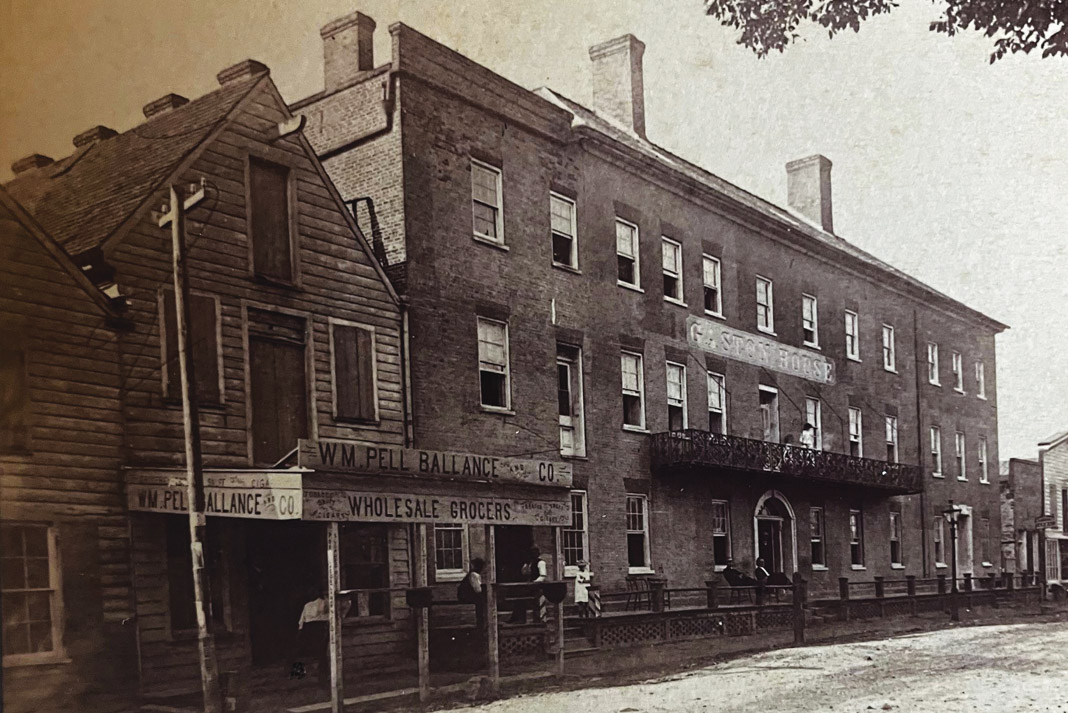
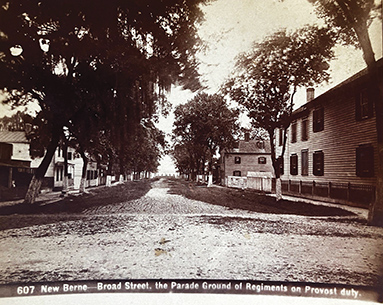
Reed was not simply a nostalgic tourist. An accomplished amateur photographer, he carried a camera and photographic plates, determined to document the places that remained in his memory from the war. In New Bern, he photographed Fort Totten, Fort Rowan, former campgrounds and barracks sites, the railroad shops, the Gaston House Hotel, and streets and buildings he remembered from his military service. His photographs became an extraordinary visual record of eastern North Carolina twenty-two years after the conflict.
The emotional contrast was striking. Before leaving Massachusetts, Reed wrote in an essay for the 44th Regimental history that he had “feelings hard to describe,” almost as though he were “going to war” again. The 44th Massachusetts had been stationed throughout eastern North Carolina, fighting in and occupying parts of New Bern, Goldsboro, Kinston, and Whitehall. Reed reflected further, “I could not picture New Berne without plenty of soldiers moving about, the old forts bristling with cannon, and war vessels on the river.” When he arrived, he discovered “great changes,” as North Carolina’s towns had been rebuilt and expanded in the years following Union occupation. One highlight of his visit to New Bern was his accommodation at the reputable Gaston House Hotel, a place where he was not allowed to stay as an enlisted soldier. “Dim memories of the reputation of the Gaston Hotel rose in our mind – those old fairy tales of realms of bliss to which enlisted men were not admitted; of beds with sheets, of tables with white cloths and napkins. We decided to go there, regardless of the exhortations and praises from another stage driver of a rival hotel.”
Reflecting on his trip, he noted that, “Those who had been in the Southern army were particularly cordial, and anxious to do all they could to make our trip agreeable. All were hospitable and hoped that more of the boys who wore the blue in North Carolina would pay them a visit.”
Reed’s 1884 journey was therefore about more than revisiting battlefields and military camps. His photographs preserved a changing landscape, while his diary captured something equally important—the gradual rebuilding of relationships between former enemies.
His visit came during a complicated era when memories of the Civil War remained strong and political and racial tensions persisted throughout the South. Yet Reed’s experiences demonstrate that personal reconciliation was possible. Men who had once faced one another across battle lines could now share memories, offer hospitality and acknowledge their common humanity.
Reed returned to New Bern carrying a camera instead of a rifle and discovered that some of the people he once considered enemies were ready to welcome him home. His journey offers a remarkable glimpse of a community—and a nation—beginning to move from the bitterness of war toward reconciliation.