
By Matt McCotter with the Epiphany Team
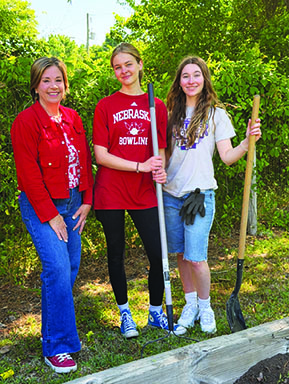
At The Epiphany School of Global Studies, education is shaped by both conviction and curiosity. Founded in 2006, the school was built on a vision of challenging college preparation, grounded in a global perspective and guided by a Christian faith presence. Anchored in the call to “Love God and Your Neighbor as Yourself,” Epiphany challenges students to grow not only in knowledge but in character. Respect, responsibility, community service, and integrity are not abstract ideals here. They are lived out daily.
Over time, that foundation has grown into something both thoughtful and dynamic. From early dual language immersion to advanced coursework and global experiences, Epiphany encourages students to uncover and expand their God-given gifts. They design classrooms to cultivate creativity, curiosity, and critical thinking, while opportunities in the arts, athletics, and community partnerships invite students to stretch beyond what they thought possible. The goal is not simply achievement; it is the formation of the whole person, preparing students to move through the world with purpose.
Pastor Kirk Ronzheimer, Director of Spiritual Life, frames that formation in its clearest terms. “You’re part of this community, it’s all of us,” he says, emphasizing that students don’t just live in a community; they belong to it. From that foundation, students begin to ask a simple but powerful question: “What can I do to help?”
From the very beginning, experiences shape students and bring that mindset into action locally. Through partnerships with area organizations and hands-on community engagement, they step into real needs, often in simple, unpolished ways. “It may not be glamorous, maybe it’s painting, digging, or restocking,” Pastor Kirk explains, “but if we can take something off someone else’s plate, it gives them a little joy and some relief.” In these moments, students begin to understand that impact is less about recognition and more about showing up.
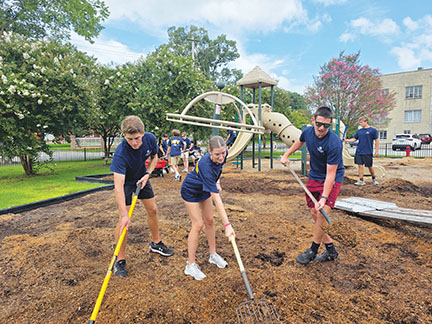
Epiphany intentionally cultivates this mindset of service year after year. Starting with a Community Day of Service in the first days of school and continuing through shared initiatives like packing thousands of meals with Rise Against Hunger, this ethos becomes part of the rhythm of school life. By their senior year, students step into a full month in May of immersive community engagement, an experience that reflects what Pastor Kirk describes as a long-term vision. “It’s all about planting seeds,” he says. “You don’t always know what it will become in the future, but you trust that it will grow.”
For students like Cadence, a senior in the Class of 2026, those seeds were planted early and grew steadily. From her first days in Kindergarten to her final year as a senior, her journey reflects a lived understanding of Epiphany’s philosophy. “I think the school opens you up to service really early on,” she says, recalling everything from supporting first responders to early community cleanups. What begins as small acts grows into a mindset. “Treat others how you want to be treated; if we needed help, we’d want someone to do the same.”
That foundation takes shape most clearly close to home. Through partnerships with organizations like RCS and The Filling Station, Cadence has experienced how community engagement strengthens both connection and understanding. “It’s not something that we find as a chore,” she explains. “Everybody here wants to serve.” Whether organizing supplies or working side by side to meet immediate needs, those moments create something deeper. “When you’re serving together, you get closer together.” In a tight-knit place like New Bern, those relationships often come full circle. “Getting to help people that you know…it’s refreshing.”
For Cadence, these experiences reinforce that impact is not one-directional, but reciprocal, a true exchange of care and understanding, a perspective that has ultimately shaped her future. “I guess I’m dedicating my life to service,” she says, pointing to her decision to attend the US Naval Academy. What began in a small classroom and local partnerships has expanded into something much larger. “I get to help others here, but I’m going to help people on a bigger level in the future.”
For Keziah, also a senior in the Class of 2026, that same journey is grounded in moments that feel both simple and significant. What began as a requirement quickly became something more meaningful. “You actually start enjoying it,” she explains, describing how local outreach shifted from obligation to genuine connection. Whether helping at community events or spending time with individuals in inclusive programs, she discovered that it is not about checking a box, but about showing up. “You’re trying to help someone else,” she says, “but in the end, it changes you, too.”
That idea comes into sharper focus during her senior year through Love in Action, a month when seniors step outside the classroom to engage with local nonprofits across the community. While participation is tied to required hours, the experience reflects something deeper than a checklist. It mirrors exactly what Keziah describes. What begins as structure becomes personal. What starts as expectation becomes investment.
A mindset of service continues to take shape through partnerships across the community. One of her most meaningful experiences has been working with individuals of different abilities, where small moments create real connection. Coloring, dancing, and laughing together become something more. “It’s a way to interact with people who are different,” she reflects, “and learn how to meet them where they are.” Back on campus, that perspective carries into daily life, from tutoring younger students to building relationships across grade levels. For Keziah, impact is ongoing. “The more we focus on helping other people,” she says, “the less we focus on ourselves.”
As students grow, those lessons begin to extend outward. For Colt, a senior in the Class of 2026, the theme of near and far comes to life through experiences that begin in community and stretch across the globe. Grounded in a culture of connection and engagement, his journey reflects how local roots can lead to meaningful global relationships.
His first step traveling outside the country came as a freshman in Costa Rica, where he lived with a host family. What began with uncertainty quickly shifted into connection. “At the beginning of the week, you’re nervous. It’s just a family in a country you’ve never been to,” he recalls. “But by the end, you develop this friendship and there’s a real bond with the community I was welcomed into.” Returning years later as a student leader, he reconnected with them, reflecting on how strangers had become lasting friends. What started in Costa Rica as a single step into the unknown became a foundation that would continue to grow and deepen in places like Chile.
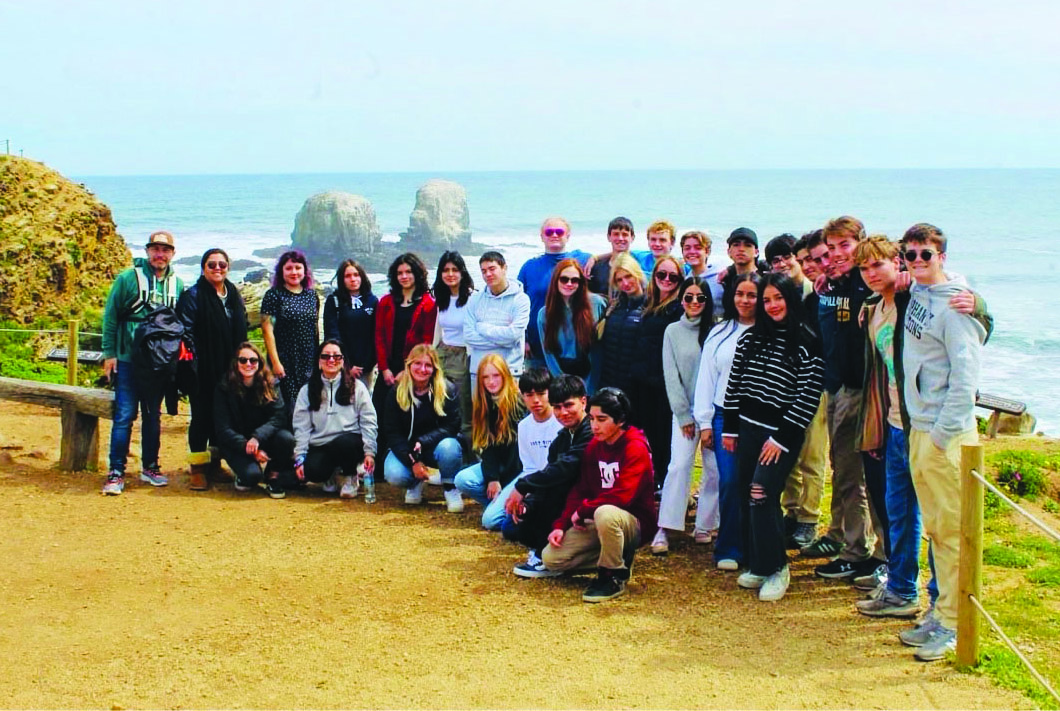
That sense of exchange deepened during Colt’s time with Epiphany’s partner school in Chile, where immersion meant stepping fully into the rhythm of daily life. “We’d spend the morning in classes with Chilean students, and then the afternoon doing activities,” he says. “You really get to understand the school experience these kids have.” What stood out most was the ease of connection. “They’re our age, you follow them on Instagram, stay in contact…you can just send them a message.” For Colt, these are not brief encounters, but lasting connections.
What makes those experiences meaningful, he notes, is the foundation built close to home. Years of language and cultural learning made it possible to engage more deeply. “It affords you the opportunity to really communicate with the friends I made there and understand them better,” he explains. “You don’t learn as much just by getting by. You learn when you’re talking with them about their families and their lives.”
Looking ahead, Colt sees these experiences as a starting point rather than a finish line. With invitations to return and a growing confidence in unfamiliar places, he feels prepared for what comes next. “It opens the door. I’m not so scared to go do that somewhere else,” he says. In that space between the familiar and the unknown, he has found something lasting. “It really shapes you…you learn so much, and it puts so many things into perspective.”
Helping shape these experiences is Sandy Haddock, Director of Global Education and Assistant Head of School, who frames her work through a lens that is both deeply local and unmistakably global. For Haddock, that distinction matters because it reflects a commitment to mutual learning, cultural respect, and meaningful connection.
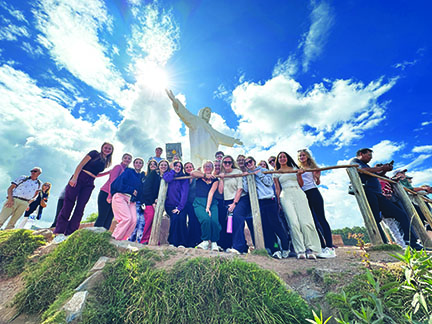
“Our programs are culturally focused,” she explains, emphasizing strands of STEM, environmental sustainability, and immersive community engagement. Whether students are working in eastern North Carolina or traveling abroad, the goal remains the same. “We’re trying to help kids from eastern North Carolina become citizens of the world.”
This global philosophy comes to life in both nearby and far-reaching ways. Locally, Haddock encourages students to rethink assumptions about helping others, shifting toward relationships rooted in humility and reciprocity. Globally, those same principles extend across cultures and continents. In Chile, students live with host families, attend school in Spanish, and experience daily life alongside their peers. This exchange comes full circle when Epiphany students welcome their friends from Chile to attend school in New Bern the following year. “We’re always learning from each other and working to build a true partnership,” she says, reinforcing that these experiences are about connection, not transaction.
Even in places that feel far away, the parallels to home are clear. Shared rhythms of life and community create a sense of familiarity that helps students better understand both difference and connection. In a world that often emphasizes distance, Epiphany’s work bridges the space between near and far. Through thoughtful partnerships, immersive experiences, and shared humanity, students come to see that global citizenship does not begin across an ocean. It begins with how they choose to engage, right where they are.
And from there, it grows and carries them forward to new challenges and new journeys.