
By Ann Marie Byrd
One of the joys of owning a small business is having the ability to make decisions based on your own priorities, which can include location, products, presentation, and principles—all in the name of profitability. But is the financial net the only endgame? This month, we are featuring two downtown businesses that have created business models based on sustainability. Let’s meet our local friends, Chameleon Blue and Twice as Nice, both located in downtown New Bern on Craven Street.
Chameleon Blue
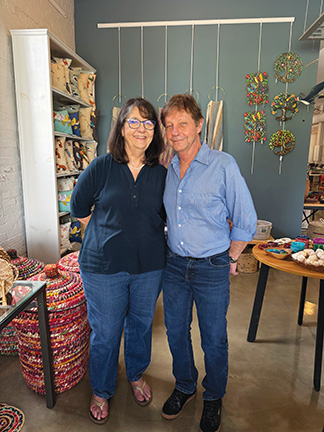
Owners: Colleen & Neil Kuschke
Located at 206 Craven Street and owned by Colleen & Neil Kuschke, this new store features high-quality, handmade products from around the globe, and the owners are driven by global Fair-Trade practices and sustainability.
Colleen says, “Chameleon Blue is a consciously curated Fair Trade gift store, showcasing hand-crafted jewelry, home and personal accessories, and clothing and gift items. We source products from artisan producers, mostly women, in 32 developing countries, in Central America, South America, Africa and Asia. Most of our items are made from sustainable or recycled materials.”
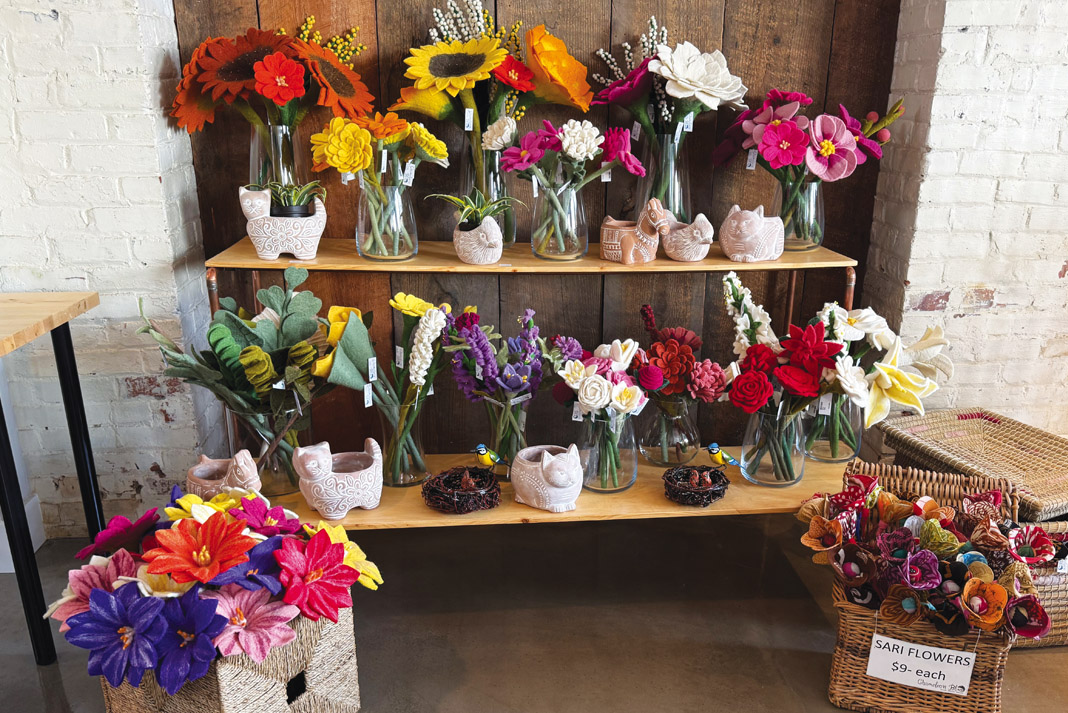
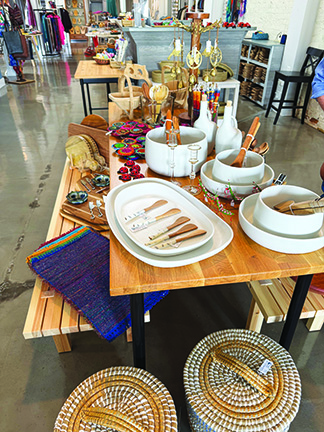
The store, which was formerly the location for The Last Detail, is filled with sunlight and a wealth of global treasures. There are soapstone carvings from Zimbabwe, white stoneware from Tunisia, cheerful felt flowers from Nepal, pine needle baskets from Guatemala, metal drum art from Haiti, jewelry from Indonesia, Peru and Columbia, and more.
Colleen and Neil relocated from South Africa, where their families had lived for many generations. Upon leaving, they first moved to New Jersey and opened a store in Clinton, NJ in October 2018. In late 2024, they decided it was time for a change and came to New Bern, opening the store at 206 Craven Street in October 2025.
“With a background in biology, the impact of industry, commerce and our lifestyles on people and the planet is of great personal significance. After 25 years of a second career in residential design, I realized I needed a change and would rather have a business which has more impact on more people, preferably with a focus on empowering women. Since we are originally from South Africa, we have always appreciated hand crafted artisan products and realize the impact of sustainable family and community businesses in poorer countries. Moving into the Fair Trade sphere when I originally opened the store, just made sense once I took all of the above into consideration.”
For readers that are new to Fair Trade, the Fair Trade Federation identifies nine principles which guide Fair Trade businesses:
Cultivate new market opportunities for artisan communities
Develop transparent and accountable relationships
Build capacity for artisans through proactive communication
Promote Fair Trade among artisans, retailers and customers
Pay makers promptly and fairly
Support safe and empowering working conditions
Ensure the rights of children
Cultivate environmental stewardship – reduce, reuse, reclaim, recycle
Respect cultural, racial and ethnic identity
Colleen says, “Our business principle considers people and planet first. We look at how raw materials are used in production, the working conditions for the artisan communities, and are concerned that the artisans–mostly women–are paid a fair wage. Often they work in their homes and the materials they use are recycled or sustainable. There is no child labor, and whomever helps them with design and import will generally help them with schooling, medical and housing loans if necessary. One of the other benefits is that there is transparency in fair trade. For example, our vendor for our soapstone items will explain what she needs in order to keep the producers sustainable (i.e. when they can and cannot create items due to managing their crops); from the other side, Fair Trade stores will detail which products sell and which do not. The goal is to help producers to become self-sufficient. Building capacity means they are earning enough to be self-employed and live reasonably well on the income from their production. They need to be sustainable, and that requires support from their community as well the support from the business that are selling their products in the retail market. In our store, we promote an awareness of the artisans – we have to be storytellers so our customers will appreciate their work.”
Twice As Nice
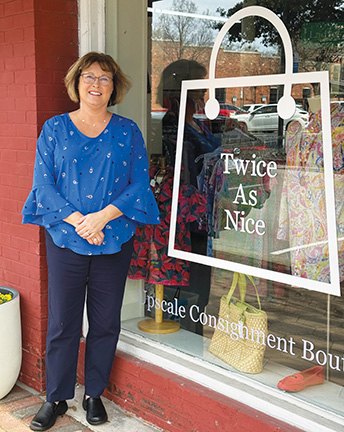
Owner: Jennifer and Barry Hardison
This well-organized consignment shop, located at 224 Craven Street, has been in business with dedicated owners who, over the years, have worked to develop a store that is truly a part of the community in downtown New Bern. Twice as Nice specializes in selling higher-end consignment, featuring designer labels, purses, jewelry, women’s wear, shoes, men’s wear, plus size clothing, formal wear, and business wear. Labels include Lululemon, Lily Pulitzer, Calvin Klein, Michael Kors, Chicos, Talbots and more.
The new owners, Jennifer and Barry Hardison, took over the business, opening August 1, 2025. Jennifer worked for the previous owners for some time before buying the business from them. In fact, she had been shopping in the store since she was in high school, and learned to appreciate that quality clothing didn’t necessarily have to come from a shopping mall. It is important to her that consignments are good brands at a much lower price, because, as she says, it gives people who couldn’t usually afford a name brand the opportunity to have something nice.
She says, “We are picky about the condition of the clothes–no stains, tears, smells, or wrinkles. All clothing goes through three sets of eyes before it gets to the floor. Quality is important. The staff here is like a family to me, and I care about the customers and consigners not as a number—I want to build relationships. We now have lots of new consigners after starting a social media presence. Consignment is getting to be popular now with younger kids. I think that the perception in the past was that consignment shopping was for the middle-aged, but now that has changed.”
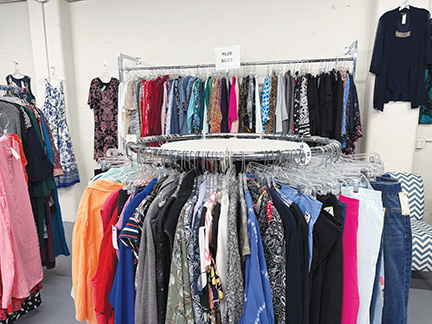
Many people are drawn to consignment because it gives clothing a second life, reducing the demand for new clothing production, and conserving natural resources. It helps keep clothing out of landfills and lowers the carbon footprint and chemical pollution caused by factory produced clothing.
These eco-friendly practices embrace the ethical implications of sustainability.
“Younger shoppers like that they are recycling clothing,” says Jennifer. “They notice that the quality of the clothing is so much better than what they would buy at a traditional store, and they are drawn to unique designs and color. We have much to offer, and we would like to welcome new visitors to the store.”