
By Ann Marie Byrd, Feature Writer
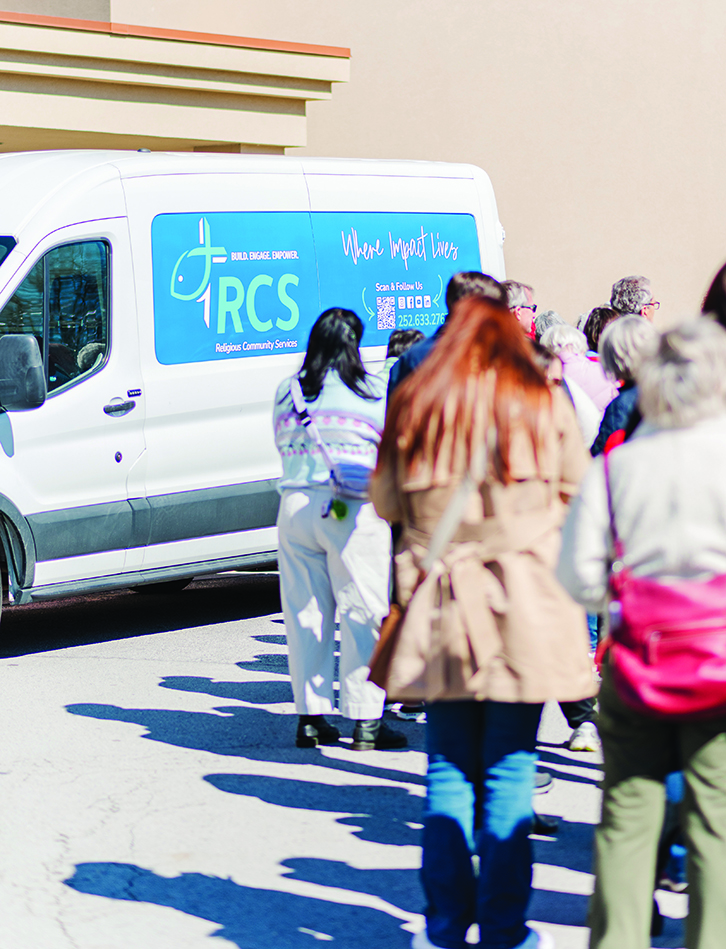
On a rainy Tuesday afternoon in New Bern, the lobby outside the Religious Community Services food pantry is quiet but expectant. A young mother stands with a stroller, rocking her toddler back and forth. A retired Vietnam vet—ball cap in hand—leans against the wall, glancing toward the door. Beside him, an older woman in a floral blouse clutches a small list: rice, beans, peanut butter, “anything fresh.”
In a few minutes, they’ll be greeted by name, asked about dietary needs, and paired with volunteers who help them with groceries. Before they leave, someone will check: Do you have stable housing? Are your lights on? How are you really doing?
For more than 40 years, this unassuming building on George Street has been a quiet front line against crisis in Craven, Jones, and Pamlico counties.
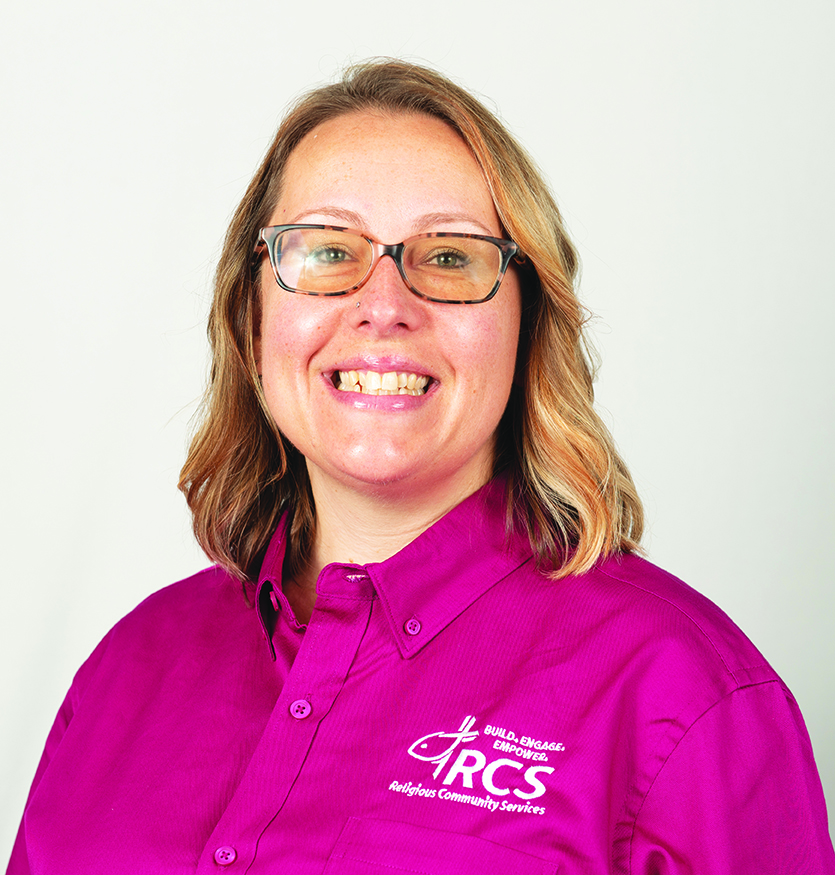
“We’re here to bridge the gap between crisis and stability,” says Executive Director Ann Marie Devanney. “That can look like a bag of groceries or a hot meal—but just as often, it’s someone finally feeling like they don’t have to go through this alone.”
A Grassroots Safety Net
Religious Community Services—known simply as RCS—began in 1982 as a collaboration among local faith communities who saw more and more neighbors slipping through the cracks. At the time, the idea was straightforward: if someone needed food, a safe place to sleep, or emergency help with bills, there should be a door they could walk through and find it.
Four decades later, that simple conviction has grown into one of eastern North Carolina’s most comprehensive emergency assistance organizations. RCS now serves thousands of individuals and families every year, offering not just food and shelter, but also clothing, financial assistance, case management, and connections to a broader network of community resources.
The mission, however, has not changed.
“From the beginning, this has been about treating people with compassion, dignity, and respect,” Devanney says. “Circumstances may change, economies shift, storms come and go—but our neighbors still deserve to be seen and supported.”
RCS remains deeply rooted in the faith communities that founded it, but its work is unabashedly community-wide. Churches, civic groups, businesses, and volunteers from all backgrounds keep the doors open and the programs running.
Beyond a Single Service: A Continuum of Care
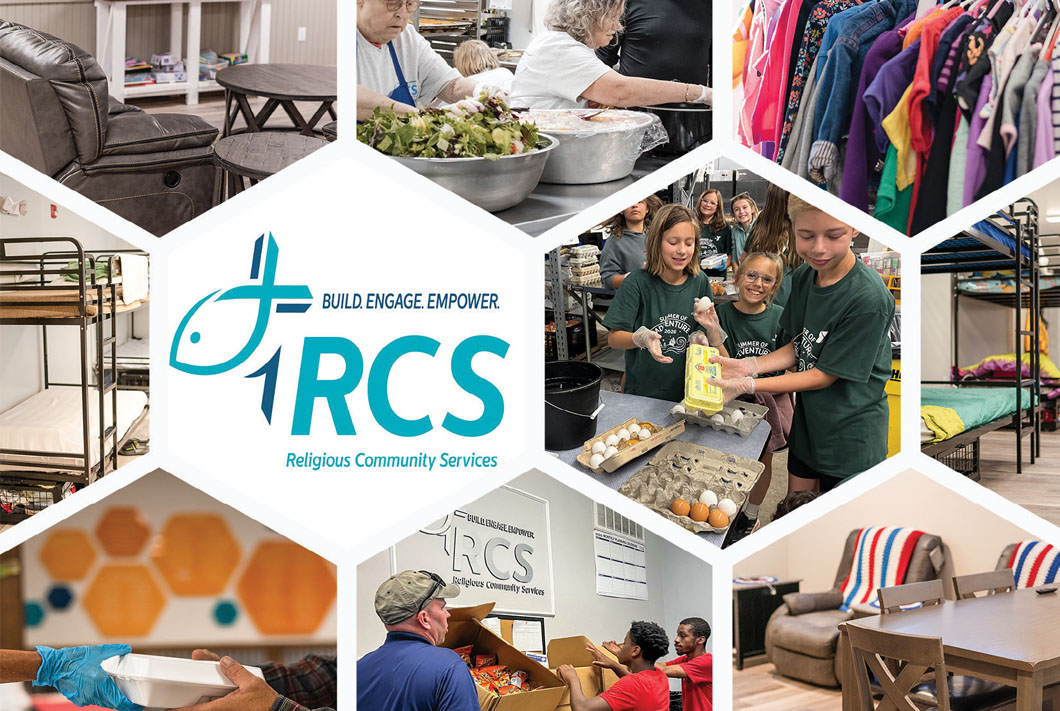
Walk through the RCS campus on any weekday and you’re likely to see several missions in motion at once.
In one corner, the Emergency Food Pantry hums with activity. Volunteers sort donations, stock shelves, and help families select groceries that will get them through the week. Nearby, staff and volunteers load vehicles for Operation Outpost and other mobile pantry initiatives—bringing food directly into neighborhoods where transportation is a barrier.
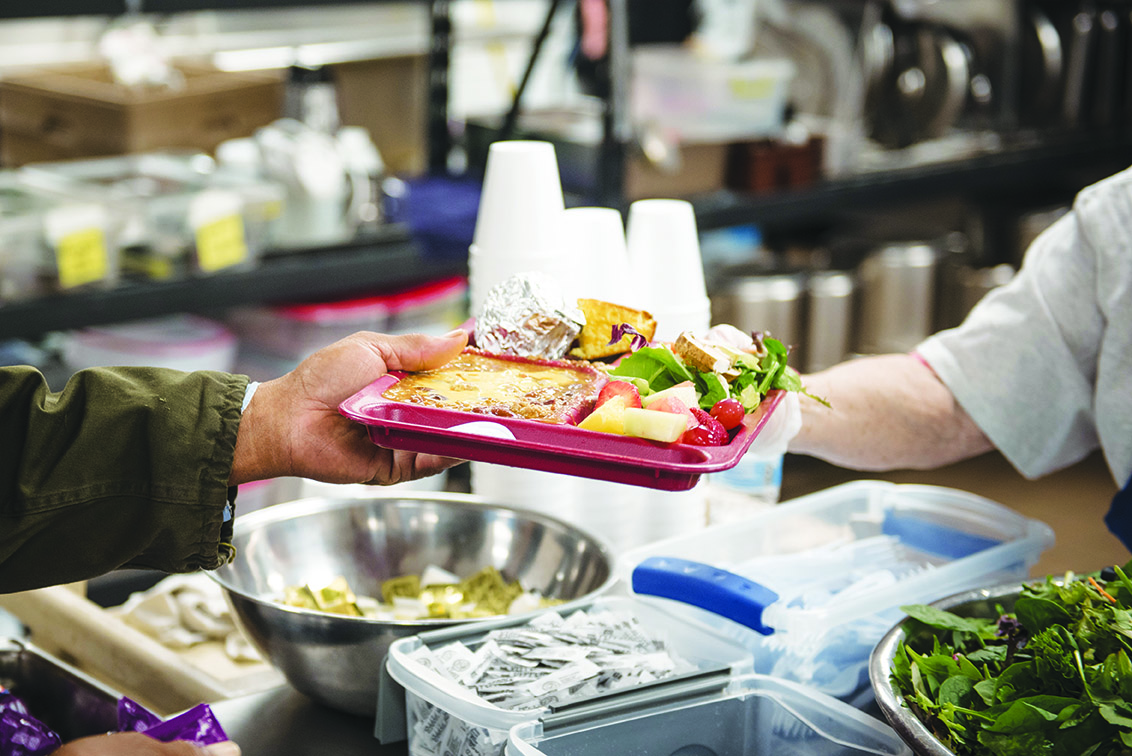
Around the corner, the Community Kitchen prepares and serves hot, nutritious meals, no questions asked. For many guests, it’s not just a meal; it’s a predictable moment of stability in an otherwise uncertain day.
The Emergency Shelter offers beds to veterans, families, and individuals experiencing homelessness, along with a recuperative care unit for those recovering from illness or medical procedures who have nowhere safe to heal. Guests receive far more than a roof and a blanket; they’re connected to case management, healthcare referrals, and other supports aimed at making the shelter stay a turning point rather than a dead end.
Next door, the Clothing Boutique looks less like a handout line and more like a small shop. Racks are thoughtfully organized; volunteers help guests find work clothes, children’s outfits, or warm coats for winter. The goal is simple: preserving dignity while meeting practical needs.
Behind the scenes, staff work through a steady stream of requests for rent and utility assistance, prescription and transportation support, and case management sessions designed to untangle the complex knot of issues that can pull a family into crisis.
“We don’t believe in one-size-fits-all solutions,” Devanney explains. “There’s no universal timeline for stability. Every person’s story is different, so our approach has to be flexible enough to match that.”
The Hidden Crisis: When There Is No Safety Net
Inflation, rising rents, and the soaring cost of basic necessities are easy enough to track in headlines. What’s harder to see is the quiet erosion of personal safety nets.
“One of the biggest misconceptions about hunger and homelessness is that people choose these circumstances or simply aren’t trying hard enough,” Devanney says. “That couldn’t be further from what we see every day.”
Today’s RCS guests include working families juggling multiple jobs, veterans navigating complex benefits systems, and seniors on fixed incomes who can’t stretch their dollars far enough. Increasingly, the organization serves individuals who have never before needed assistance.
“Many of the people we see don’t have someone they can call when the bottom falls out,” Devanney notes. “No relative who can help with a security deposit. No friend who can cover a light bill after a medical emergency. Without that support system, a flat tire, a missed paycheck, or a sudden illness can spiral quickly into eviction or homelessness.”
Transportation barriers, limited affordable housing, and even something as simple as a lost identification card can delay recovery and make rebuilding far more difficult.
RCS steps into that gap—not as a replacement for family, but as a community safety net that says: you are not on your own here.
Michael’s Story: Crisis as a Crossroads
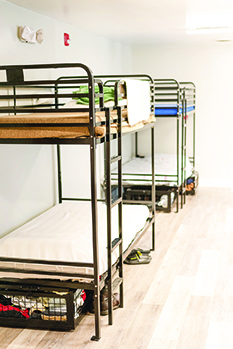
If the numbers tell one story, the faces tell another. One of those faces is Michael.
When Michael arrived at RCS, he was out of options. The place he had been living had become unsafe and uninhabitable. Practically overnight, he found himself without stable housing, unsure where he would sleep or how he would start over.
At RCS, he found more than a bed.
Staff helped address his immediate needs first: a safe place to sleep, meals, and clean clothes. Then they began working with him to chart a path forward—connecting him with additional community resources, assisting with paperwork and documentation, and helping him tackle the practical barriers standing between crisis and stability.
But what Michael remembers most isn’t just the services. It’s the way he was treated.
He wasn’t a problem to fix, rather, he was a person who still had a future.
For RCS, that is the measure of success.
“A win isn’t just providing groceries or a night’s shelter,” says Devanney. “It’s helping someone overcome the barriers in their way and reminding them that their current circumstances do not define their future.”
Michael’s story, like so many others, underscores a reality that RCS sees every day: homelessness is rarely a simple, single-choice outcome. Often, it’s the cumulative effect of job loss, health issues, lack of family support, and systemic challenges—intersecting all at once.
By the Numbers: A Year of Impact
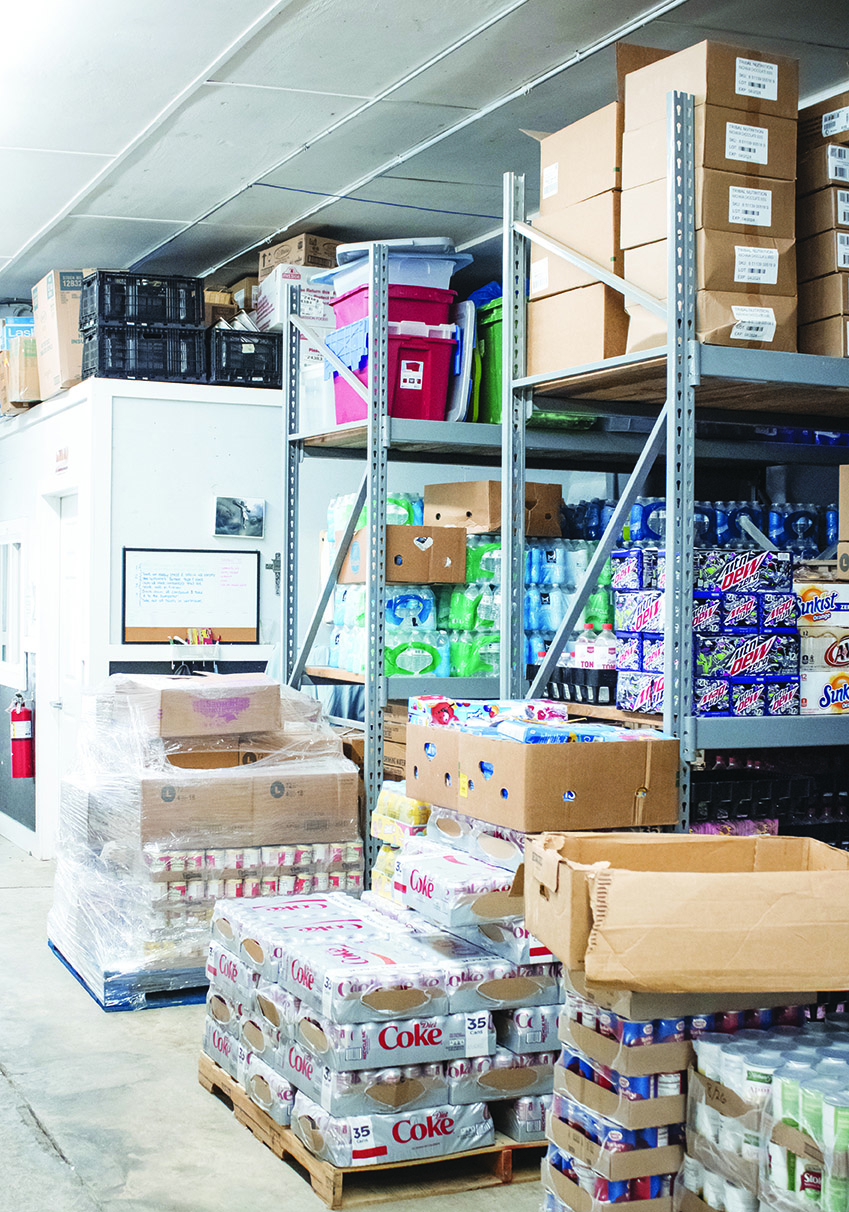
In a typical year, the scope of RCS’s work is staggering. In 2025 alone, the organization:
• Served 11,888 individuals through the food pantry, Operation Outpost, and other community food distributions
• Provided 47,449 meals through the Community Kitchen
• Processed more than 871,000 pounds of food
• Distributed more than 667,000 pounds of food to neighbors in need
• Offered 10,842 nights of emergency shelter
• Filled 1,673 prescriptions through the Prescription Assistance Program
• Facilitated 182 referrals to connect clients with additional community resources
• Conducted 616 case management sessions to help individuals work toward long-term stability
• Provided more than $44,000 in rent and utility assistance to help families remain safely housed
• Welcomed 3,250 volunteers who gave their time and talents in support of the mission
Each of these figures represents far more than a statistic. Every meal served is a night when hunger did not have the final word. Every prescription filled is a step toward health and independence. Every night of shelter is a night when someone could sleep safely, indoors, with a plan for tomorrow.
“Every number represents a neighbor,” Devanney says. “Every statistic tells the story of someone who found hope during a difficult season.”
Powered by Community
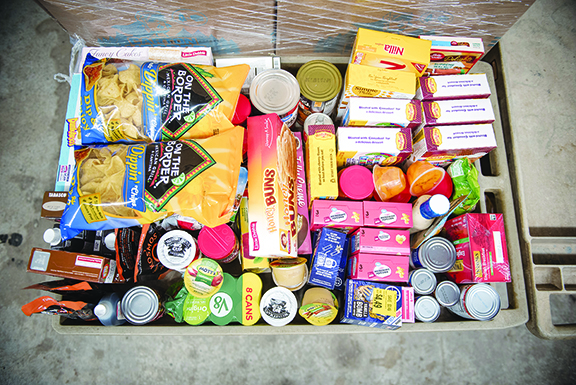
At its core, RCS is a grassroots, community-driven organization. It does not operate within rigid program silos; instead, it listens closely to what the community needs now and adapts accordingly.
That adaptability is possible because of an extraordinary network of support.
Volunteers stock shelves, serve meals, sort clothing, offer professional skills, and sit one-on-one with guests. Donors—individuals, businesses, and civic groups—provide financial resources that keep the lights on, the pantry stocked, and the shelter open. Churches and faith communities continue to be steadfast partners, reflecting the organization’s founding spirit.
“Quite simply, they are the lifeblood of this organization,” Devanney says. “Without them, our programs would be limited. Their investment allows us to respond quickly whenever new needs arise.”
Haunted Histories and Hopeful Futures

While grants and designated funding streams are crucial, RCS’s ability to respond nimbly to emerging challenges depends heavily on unrestricted support. That’s where one of New Bern’s most distinctive annual events comes in.
Each fall, RCS hosts its signature fundraising gala, Haunted Histories: Tales of the High Seas. On Friday, October 17, 2026, the New Bern Convention Center will transform into an evening of storytelling, entertainment, and community celebration—with a purpose.
Funds raised through the gala are unrestricted, meaning they can be directed wherever the need is greatest. When an unexpected crisis strikes, when a new barrier emerges, or when a family’s situation doesn’t fit neatly into a grant category, it’s these dollars that make it possible for RCS to say “yes.”
“Unrestricted funding gives us the flexibility to be who we say we are—an organization that meets people where they are,” Devanney explains. “It allows us to innovate, expand services, and keep showing up when our neighbors need us most.”
How to Step Into the Story
RCS’s work is, by design, a community project—and there are many ways to become part of it.
Community members can:
• Volunteer in the food pantry, Community Kitchen, shelter, warehouse, boutique, or client services
• Organize drives for food, clothing, hygiene items, or other supplies through businesses, churches, civic groups, or neighborhoods
• Sponsor or attend the annual gala, Haunted Histories: Tales of the High Seas
• Make financial contributions to sustain and expand programs and services
• Donate in-kind items such as food, clothing, and hygiene products
• Share the mission of RCS with friends, coworkers, and neighbors
Every act of generosity—an hour volunteered, a can of food donated, a check written, a story shared—strengthens RCS’s ability to serve.
Financial contributions can be made online at rcsnewbern.com, or by mailing or delivering donations to:
Religious Community Services (RCS)
919 George Street • New Bern, NC 28560
Phone: (252) 633-2767 • Public Hours: Monday–Friday, 8 a.m.–4 p.m.
Bridging the Gap, Together
As New Bern and the surrounding counties continue to grow and change, the needs of the community are evolving. RCS is evolving, too—expanding programs, refining services, and listening closely to the people who walk through its doors.
What has not changed is the conviction that launched the organization more than 40 years ago: every neighbor deserves dignity, compassion, and hope.
“What we do here doesn’t just serve ‘clients,’” Devanney says. “It serves our coworkers, our friends, our families—people we see at the grocery store and in the pews. This is our community.”
Back in the lobby outside the food pantry, the young mother gently nudges her stroller forward as the line moves. The retired vet folds his list into his pocket. The woman in the floral blouse smiles at a volunteer who recognizes her from a previous visit.
They are not alone. Behind them stands a community willing to bridge the gap between crisis and stability—one meal, one night of shelter, one conversation, and one act of generosity at a time.