
by Edward Ellis, Special Correspondent
Weighed by current measures, Zebulon Baird Vance is controversial, flawed, or worse. Born into relative poverty – a Buncombe County log cabin on May 13, 1830 – his family still managed to be slave holders. In his youth, he defended the system. He fought as a Confederate officer – at New Bern, no less – to maintain the status quo, although his best biographers would later report his opposition to the premier three-letter supremacist group after the war.
But in his own era, others found much to admire.
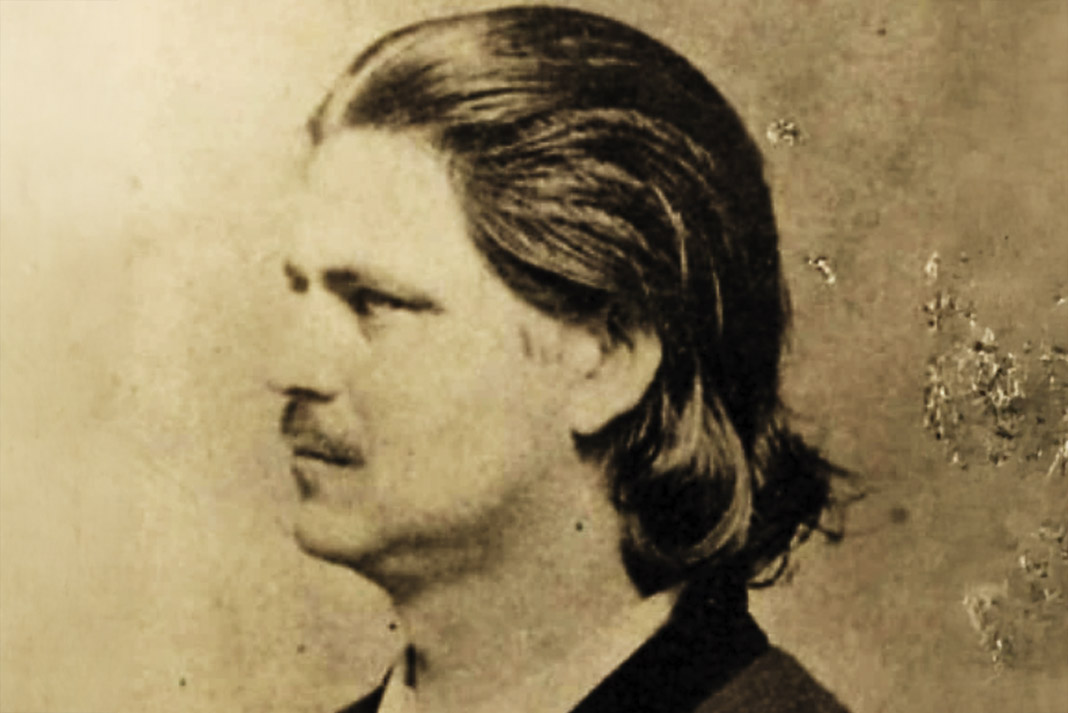
“He is in fact a physically formidable man, six feet tall and 230 pounds,” a writer for Our State magazine recalled not long ago. “He is handsome, easily recognizable by his thick mustache and shock of long, unruly hair swept back from his forehead. He is known as a spellbinding orator, a practical joker, a canny politician, and a stubborn fighter.”
Vance and his 26th North Carolina found themselves in the thick of the Battle of New Bern in March 1862. Despite facing Union forces that outnumbered them four to one, his regiment held its ground for roughly five hours and was the final Confederate unit to leave the field. Their ordeal didn’t end with the retreat. When his men needed an escape across the deep waters of Brice’s Creek, he plunged into the stream on horseback to secure boats for the regiment. The attempt came at a terrible cost: the three soldiers who tried to cross with him drowned, leaving Vance as the lone survivor of that effort.
He was an effective attorney, a gifted journalist, with a public speaking style said to “set the mountains on fire.” After serving in the state senate, North Carolinians elected him governor twice. (He was the 37th and 43rd head of state). They sent him to Congress. He was a prominent leader of the South during the War Between the States and the Reconstruction era. He advocated school construction, railroad expansion, and reconciliation with the North.
He’s also the namesake of Vanceboro and Zebulon, N.C. They named Vance County after him for good measure. Today, his statue, shown nearby, stands on the grounds of the state capitol. Regardless of our current views, Vance, who died in Washington, D.C. on April 14, 1894, was a more fascinating character than can be captured in this brief vignette.