
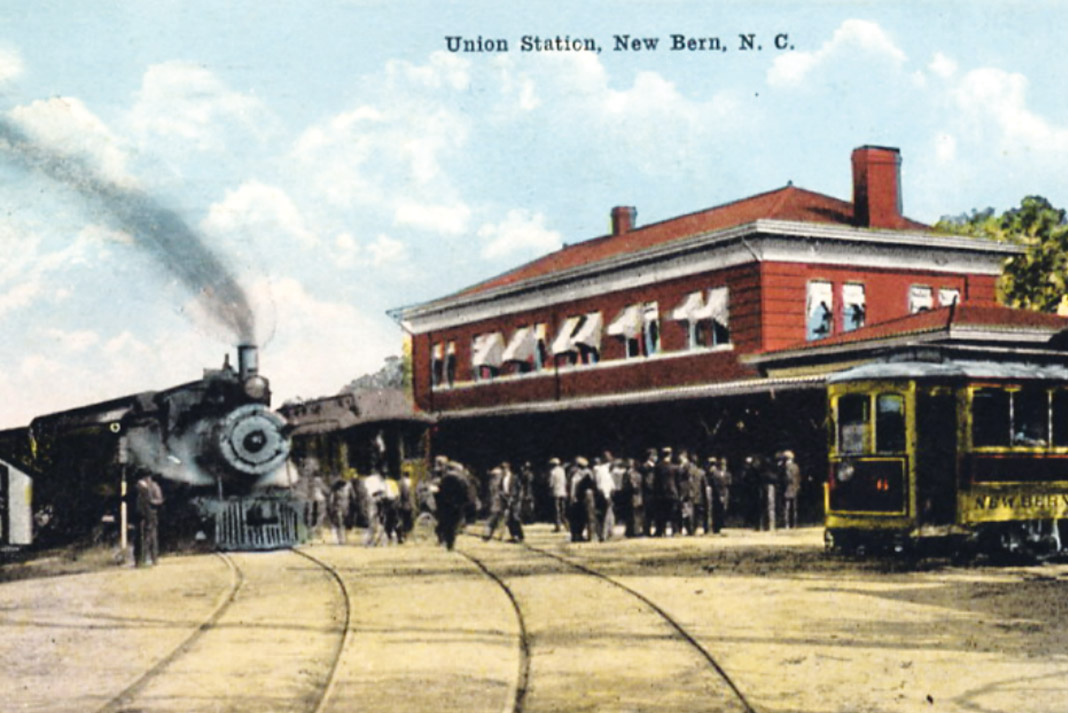
by Edward Ellis, Special Correspondent
Few developments in Craven County reshaped everyday life quite like the arrival of the railroad in 1858. Overnight, folks could step down from a weary horse or muddy mule, abandon the buggy, and glide away to Goldsboro or Morehead City at a pace that felt downright futuristic. The world suddenly seemed bigger, closer, and full of possibility.
You’d think everyone would’ve thrown their hats in the air. You’d be wrong. Plenty of people greeted the iron horse with a rich mixture of suspicion, dread, and heartburn.
For starters, the speed terrified them. Atlantic & North Carolina Railroad trains barreled along at a blistering 20-30 miles per hour — fast enough, some doctors warned, to scramble the brain, collapse the lungs, or induce a general state of “derangement.” Critics fretted about passengers fainting, organs shifting around, or falling victim to the mysterious new ailment known as “railway madness.”
Then there were the business interests that saw doom on the horizon. Stagecoach operators and ship owners braced for the worst. Farmers worried too. If the trains didn’t flatten their livestock outright, the racket would surely spook milk cows into drying up and convince chickens to stop laying eggs altogether. Sparks from the locomotives might ignite fields or barns, and the quiet countryside’s peace would be gone for good.
Mothers fretted about their children breathing in smoke, soot, and cinders as the engines chugged through town. Others warned that trains would usher in crime, smallpox, and all manner of “undesirable” strangers. Some religious voices even declared the whole enterprise unnatural — a mechanical affront to God’s intended order. Not to mention the worries about disastrous derailments, hideous crashes, or exploding steam boilers.
Still, through all the handwringing, the New Bern Daily Journal remained a loyal cheerleader. Year after year, its editors praised the railroad’s promise of convenience, commerce, and connection. Naturally, big businessmen and many politicians rubbed their palms with glee.
And, despite it all, gradually the fears faded, the whistles became familiar, and the railroad settled into its role as a defining feature of local life. All aboard!