
By Edward Ellis, Special Correspondent
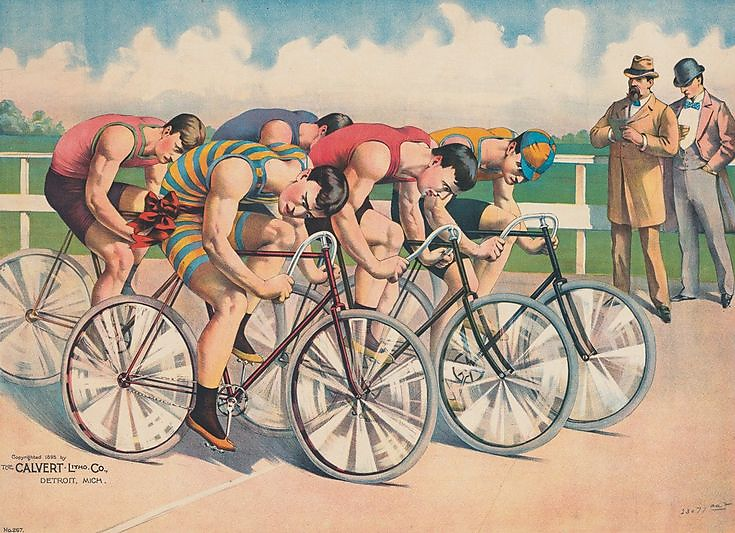
In the second half of the 1800s, the United States went a little wacky for bicycles. First, the “velocipede” with the big front wheel; then bikes built for two or three or more. Men rode in suits and women in long dresses. One marketing campaign suggested a kid was “only half a boy without a bicycle.”
By the end of the century, New Bernians had caught the bike bug, too, as evidenced by the annual Thanksgiving races that began in 1895. That year, 500 eager souls paid their fifteen cents to enter The Oaks racing grounds, three miles north of the city. The spectators rode horses, buggies, and carts – and, presumably, bicycles – or walked from downtown to see an afternoon of rough-and-ready he-man bouts, daredevil trick riding, and a whimsical crowd-pleaser known as a “gymkhana” from the newly-built grandstand.
Attendees packed the rails for four events, including a novice race, one for married men, and a one-mile bicycle club championship whose winner earned a gold medal. The championship race was punctuated by an accident that left one rider with a bloody face. The injured man said it was “only a scratch,” but was carried off to the dressing room under the judges’ stand and raced no more that day.
Between events, the New Bern Daily Journal reported “fancy and trick riding – so the programme read – by Will Hunter of Texas, a lad of some 14 years. He rode backwards, balanced himself upon the front wheel, and struck an attitude quite gladiatorial, took off the handlebars, and spun around like a top.”
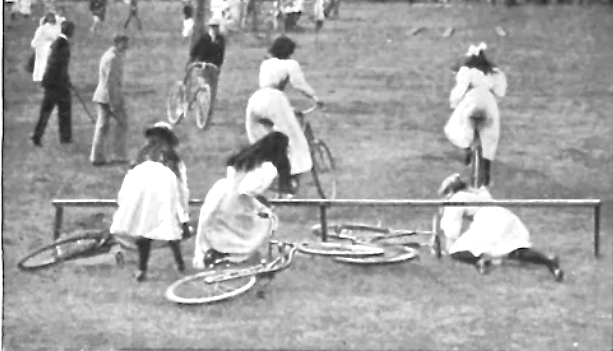
The gymkhana was a lively obstacle-course contest where cyclists zigzagged through barrels, snatched rings from posts, and balanced over narrow planks. Riders might have to go over a barrier, or under one, as shown in the nearby image of a girls’ race. Spectators cheered as cyclists wobbled, sprinted, and occasionally toppled in the dust, turning Victorian-era athleticism into a spirited mix of skill, competition, and comedy.
New Bern merchants Hackburn and Willets owned The Oaks and hosted the events, which were expanded in 1896 and 1897.