
By Claudia Houston, New Bern Historical Society
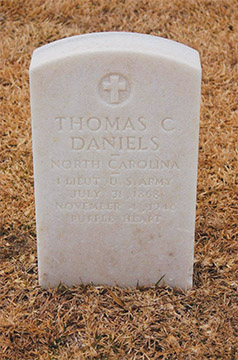
Union soldiers were often buried at Cedar Grove at first, until the New Bern National Cemetery was established on Feb. 1, 1867. Many remains were later reinterred there from the surrounding area. So why was Thomas Daniels—a Union veteran—still buried at Cedar Grove?
What I learned made the answer feel less like an error and more like a family choice. Thomas Cowpers Daniels Sr. was born in England and emigrated to the United States. He enlisted in Co. K of the 99th NY Infantry in Boston on Jan. 13, 1862, and was later transferred to Co. B in New Bern. He was discharged in Beaufort on Jan. 13, 1865. He married Mary Willis from Carteret County, and the couple settled in Morehead City before moving to Pollock Street in New Bern. Thomas worked as a fishmonger. He died in Raleigh on Dec. 4, 1924—and is buried at Cedar Grove with Mary and their family in their family plot.
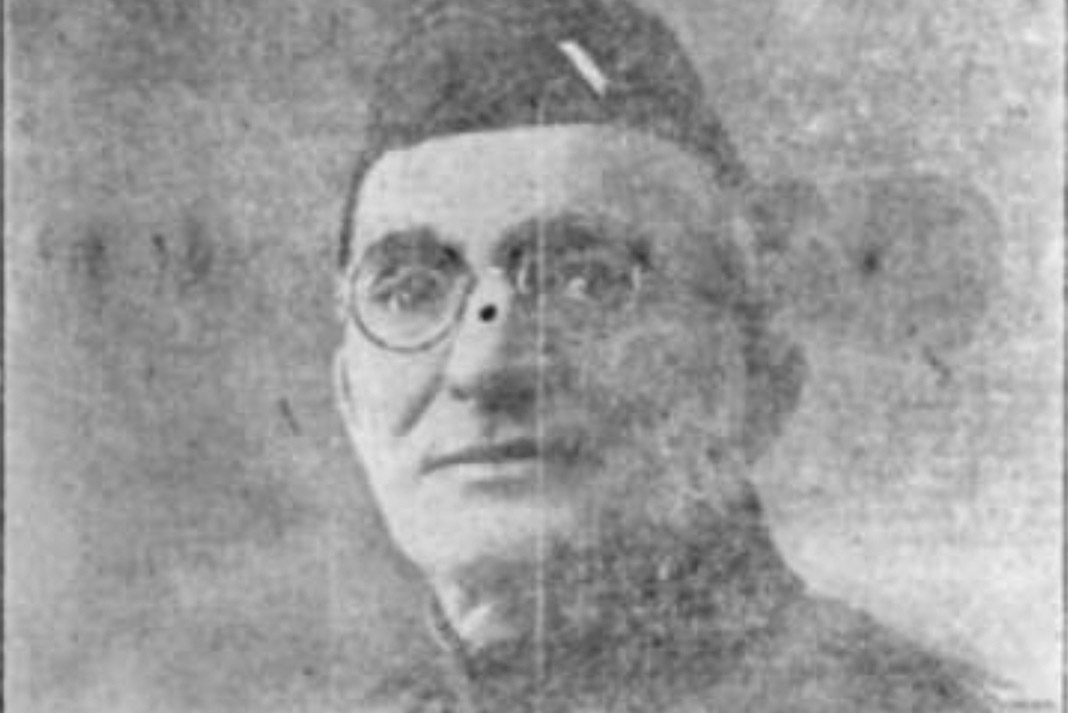
The rabbit hole soon revealed an amazing story of the oldest son, Thomas C. Daniels Jr., and the fact that everyone in New Bern and across North Carolina came to know him with good reason.
Thomas Jr. weighed only three pounds at birth and was a sickly child. After the family moved to New Bern, at sixteen, he contracted tuberculosis. His doctor advised that if he didn’t move to the drier western part of the state, he would likely die. Thomas took matters into his own hands and designed his own exercise regimen. It worked. In 1888, he was admitted to Trinity College, which later was renamed Duke University and became a football star—playing in the first collegiate football game in the South, Trinity vs. the University of North Carolina. He was an athletic standout in several sports, became team captain in 1891, and—upon graduation—attended a school for coaches. He later became the first coach at A&M College
in Alabama.
After college, Thomas served for about 25 years in the naval militia, retiring in 1915 with the rank of Commodore. During the Spanish-American War, he supervised signal stations along the coast. When World War I broke out, he was around fifty—well beyond draft age—but volunteered anyway. He did not want to be stuck behind a desk; he wanted to be in the action. After passing medical exams, he enlisted in August 1917 and trained at Fort Oglethorpe.
He sailed for France in early 1918 and fought in major campaigns. During the war, he was wounded and lost an eye, suffering other lasting injuries. For his bravery, he received the Croix de Guerre and the Purple Heart.
When he returned home, Thomas became a community leader. He founded and was the first commander of the Donerson-Hawkins post of the American Legion in New Bern, later serving as district and state commander. He also spent decades with the Elks, including as Exalted Ruler and long-time Secretary. Active at the First Baptist Church on Middle Street, he even helped train a ladies’ drill team.
And here’s what still surprises me: when I first shared this story years ago—back on Facebook in 2014—almost no one had heard of Thomas Daniels Jr. Yet in his time, “Captain Tom” was known far and wide. His legacy shows up in the letters and telegrams Duke received after his death and in the engraving on his headstone at the New Bern National Cemetery.