
By Claudia Houston, New Bern Historical Society
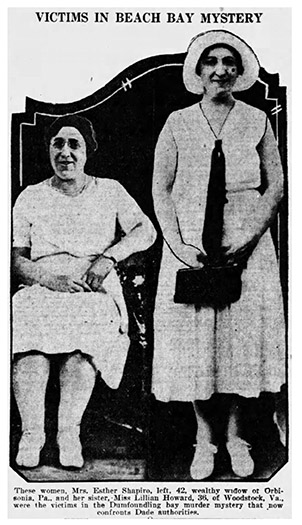
Ellis Howard, a Russian Jewish immigrant, arrived in New Bern in 1892 and lived with his wife, Dora, on Hancock Street with several of his children, including their youngest, Esther and Lillian. Their married son, Philip, also lived on Hancock Street in a separate abode. The family belonged to a small Jewish congregation in New Bern.
Ellis died in 1900 and was buried in the Hebrew Cemetery in New Bern. Dora and the children moved to Baltimore to be near family. Philip remained in New Bern, building Howard’s Clothing store on Middle Street. Lillian worked for Wenders Department Store in Baltimore, a family-owned business. She remained unmarried. Esther married Meyer Shapiro, a wealthy banker and merchant. They resided in Pennsylvania until 1930, when Meyer died in a traffic accident.
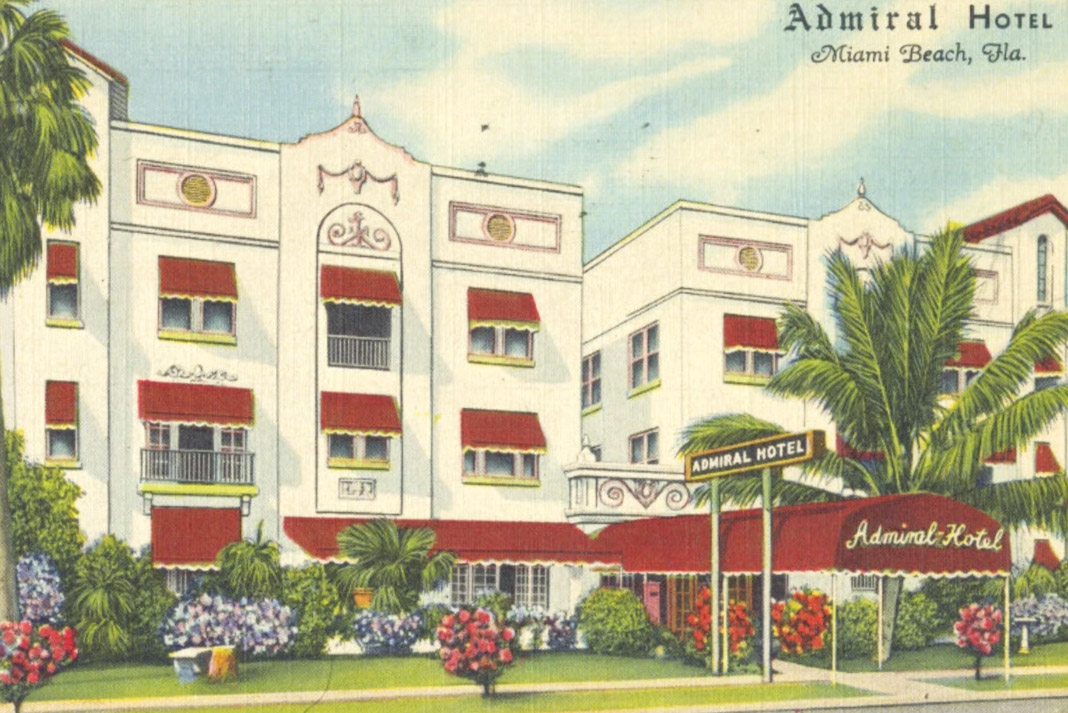
In February of 1933, Lillian, age 35, and Esther, age 41, began a three-month stay at the Admiral Hotel in Miami Beach, mingling with friends, attending parties, and enjoying a daily spa treatment.
In May 1933, Lillian and Esther were preparing to drive home to Woodstock, Virginia. Only Lillian had a license, and she was not feeling well. They tried to hire a driver but also contacted their niece, Violet, in West Palm Beach, to ask for her assistance with driving home. They decided to leave the hotel at 6 pm on May 14, 1933, and head to their niece’s home, but never arrived.
On June 1, nearby Dumfoundling Bay yielded a grim discovery. Two nude women were found bound together with black oilcloth, their skulls crushed. Initially unidentified, the victims appeared in daily headlines.
A breakthrough came when the manager of the Admiral Hotel, Aaron Rausin, received a telegram from Simon Wender, Esther and Lillian’s nephew. He asked the Manager to send him a telegram as soon as his aunts left the hotel, and to relay their destination. Rausin passed the message on to the police and informed them that the sisters had left on May 14 at 6 pm and planned to meet Violet in West Palm Beach before driving home. A telegram from Violet the next day, addressed to the sisters, informed them that she could drive them home if they were unable to make other arrangements. This made it clear that the sisters never made it to West Palm Beach. The relatives and police now suspected that the murdered women were Lillian Howard and Esther Howard Shapiro.
Simon Wender informed the police that his aunt, Lillian, had unusual dental work. He arranged for local dental records to be shared with the Medical Examiner and the police. Those records, along with physical descriptions of the women, confirmed the identities of Esther and Lillian. The porter from the Admiral Hotel also confirmed that the oil cloth looked like the type he had used on the morning of May 14th, when he helped cover the baggage in their car.
Police issued bulletins nationwide for the gray Chevrolet coupe. registered in Lillian’s name. The bulletins asked for a careful check of all garages, junkyards, and suspected vehicles. There was a futile search for the car in the bay using drag nets and grappling hooks.
When Simon Wender conferred with the police, the theory that robbery might be the motive for the killings was strengthened by his explanation that his aunt Esther was quite wealthy, with an extensive jewelry collection, and had a ring she wore frequently, valued at $2,000.
Mr. Wender arranged for the bodies to be returned to Baltimore. Lillian Howard and her sister, Esther Shapiro, were laid to rest on June 8 at the Friendship Hebrew Cemetery.
On June 7, James Humphries, a friend of the sisters, was questioned by Boston police, where he resided. Mr. Humphries admitted that he had been the companion of the women on many auto rides and beach parties but did not know what happened to them. No arrest was made.
The last article to appear in the newspaper concerning this case appeared on June 30, 1933. The Miami News led with the headline, “Dade officials admit failure in probe of women’s deaths.”
The car was never located, nor was any jewelry. There was no DNA testing in 1933. There were no other suspects to be questioned. The police had exhausted all leads, and the case had gone cold.
While the archives are sparse, new researchers and modern forensics might yield some answers to this unsolved case. May the memory of the Howard sisters not be forgotten.